Altitude's Role in Reshaping Scores at Elevated Mountain Venues and Track Surfaces
Written by Parker Butler · Jul 26, 2026
Altitude's Role in Reshaping Scores at Elevated Mountain Venues and Track Surfaces
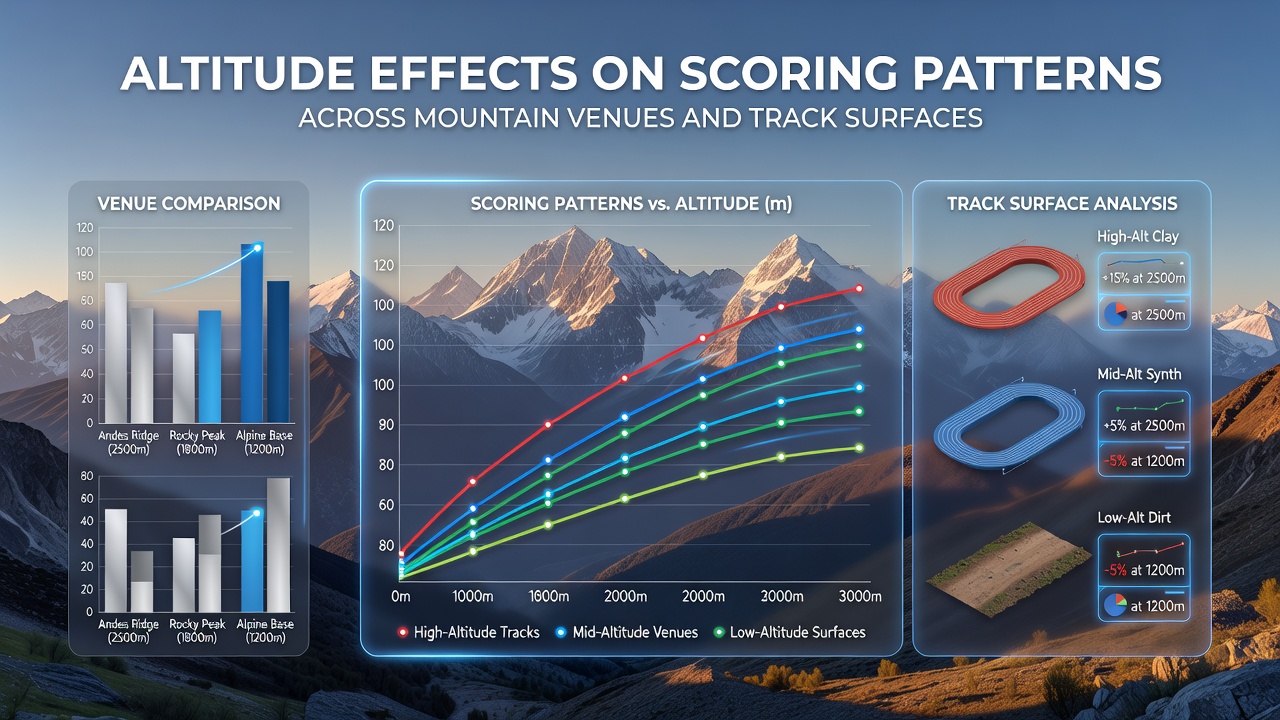
High-elevation sports facilities create measurable shifts in scoring patterns because lower oxygen levels reduce endurance and alter ball flight characteristics while track surfaces at those heights often harden or dry faster than their sea-level counterparts. Researchers have documented these changes across multiple disciplines and the patterns show up consistently in data from soccer matches, tennis tournaments, golf events, and horse racing meets held above 1,500 meters. Data collected at venues such as Estadio Hernando Siles in La Paz and various Colorado ski resorts hosting summer athletics events reveal lower total goals in football, quicker point conclusions in tennis rallies, and adjusted yardage calculations in golf when players compete at elevation.
Physiological and Environmental Mechanisms at Play
Reduced partial pressure of oxygen forces athletes to work harder for the same power output, which researchers note leads to faster fatigue in prolonged efforts while short bursts of speed can actually increase because thinner air creates less drag on movement. Studies from institutions in Canada and Switzerland indicate that aerobic capacity drops roughly 10 percent for every 1,000 meters gained, yet anaerobic actions such as sprinting or striking a ball see minimal hindrance and sometimes slight improvement. Track surfaces compound these effects because mountain venues frequently use harder, less irrigated dirt or artificial compounds that increase bounce and speed, which in turn shortens race times or changes bounce angles in tennis and golf.
Ball trajectory changes become especially noticeable in golf and football because the reduced air density allows projectiles to travel farther and with less curve. Figures from the Professional Golfers' Association events at courses above 2,000 meters show average drive distances rising by 15 to 20 yards compared with comparable sea-level layouts, while footballs kicked at altitude maintain flatter paths and cover extra distance on long passes. Surface conditions interact with these aerodynamics because firmer ground at altitude reduces friction, giving balls extra roll that players must account for in club selection and shot planning.
Documented Patterns Across Sports and Venues
Observers tracking scoring in mountain-based competitions report lower total goals in soccer matches played above 2,500 meters, with data from Bolivian league fixtures and international qualifiers showing average goals per game falling by nearly one full goal compared with lower-altitude counterparts. Tennis tournaments held at similar elevations record shorter average rally lengths because serves gain pace and spin decays more rapidly, which researchers attribute to both physiological strain on players and altered ball behavior. Horse racing meets at tracks such as those in the Andes or Rocky Mountain regions demonstrate faster early fractions on dirt surfaces that have baked under intense sun and thin air, leading to different pace dynamics than races run on softer coastal tracks.
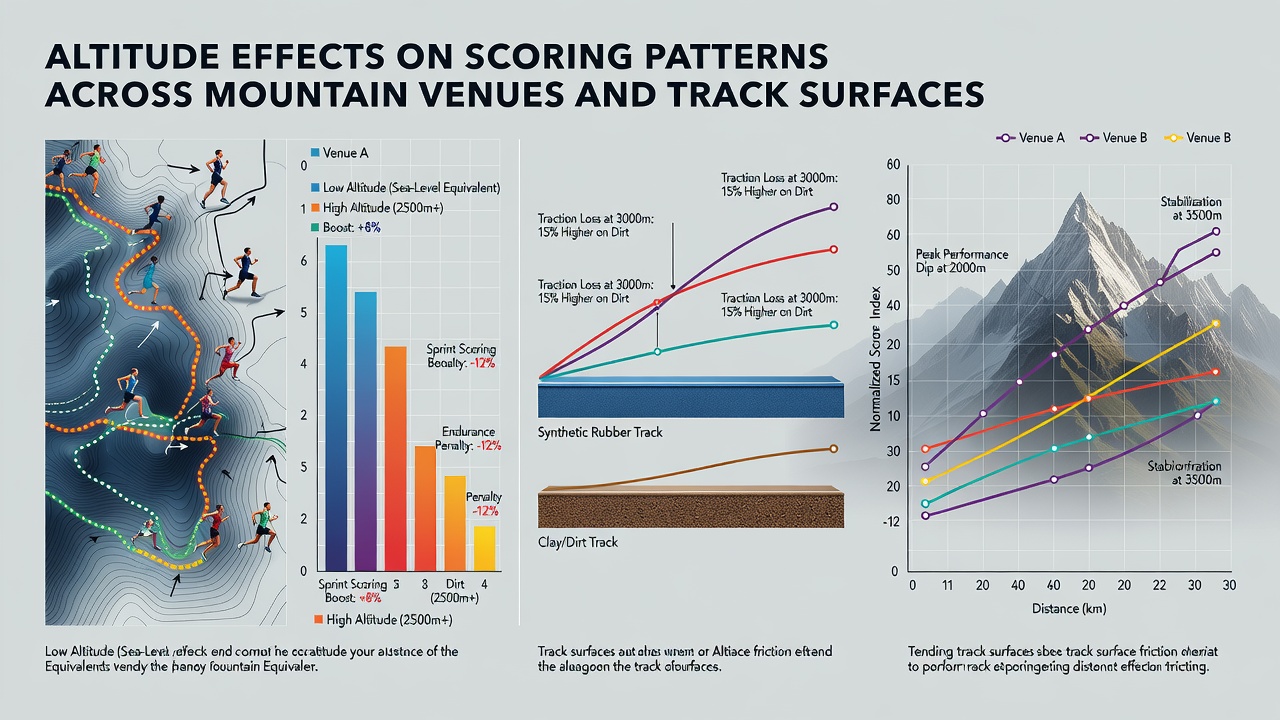
July 2026 fixtures at several Andean and Alpine venues continue to follow these established trends, with preliminary figures from regional federations indicating consistent reductions in total points scored during afternoon sessions when temperatures peak and humidity drops. Golf tournaments scheduled for Colorado and Swiss mountain courses during the same period show scoring averages remaining 1.5 to 2 strokes lower per round than comparable events at lower elevations, according to tournament statistical summaries. Surface preparation teams at these sites adjust irrigation schedules and aeration techniques precisely because the thinner atmosphere accelerates moisture evaporation, which hardens fairways and increases roll distances in ways that directly influence scoring opportunities.
Interactions Between Altitude, Surface Type, and Game Flow
Harder track surfaces at elevation accelerate ground balls and reduce stopping distances in football and tennis, which researchers link to higher numbers of through balls and quicker points that bypass extended rallies. Softer or synthetic surfaces installed at some mountain venues mitigate these effects to varying degrees, yet even modified tracks still exhibit faster overall play than their low-altitude equivalents because the primary driver remains reduced air resistance. Analysts examining horse racing data note that dirt surfaces at altitude compact more tightly after minimal rainfall, producing times that favor front-runners while disadvantaging closers who rely on late energy reserves already taxed by lower oxygen availability.
One study conducted by researchers affiliated with the University of Calgary examined multiple summer athletics meets held between 1,800 and 2,400 meters and found that sprint events posted times 1.2 to 1.8 percent faster than sea-level benchmarks while distance events slowed by 4 to 6 percent, patterns that mirror observations in other endurance-based sports. Similar surface and altitude combinations appear in European mountain cycling stages and North American ski resort golf events, where governing bodies publish adjusted performance metrics to help participants and analysts interpret results accurately.
Conclusion
Altitude combines with surface characteristics to produce repeatable shifts in scoring across mountain venues, with data showing lower totals in endurance-heavy sports, increased distance in projectile-based events, and altered pace profiles on hardened tracks. Organizations such as the International Olympic Committee and the Australian Institute of Sport continue to monitor these variables through ongoing research programs, providing updated guidelines that help standardize competition conditions and performance expectations at elevation. These documented interactions between thinner air and track composition remain central to understanding scoring patterns wherever competitions move into mountainous regions.