Calendar Crunch: Squad Rotation Tactics in Soccer and Scheduling Overlaps in Tennis for Accumulator Edges
Written by Parker Butler · Jul 1, 2026
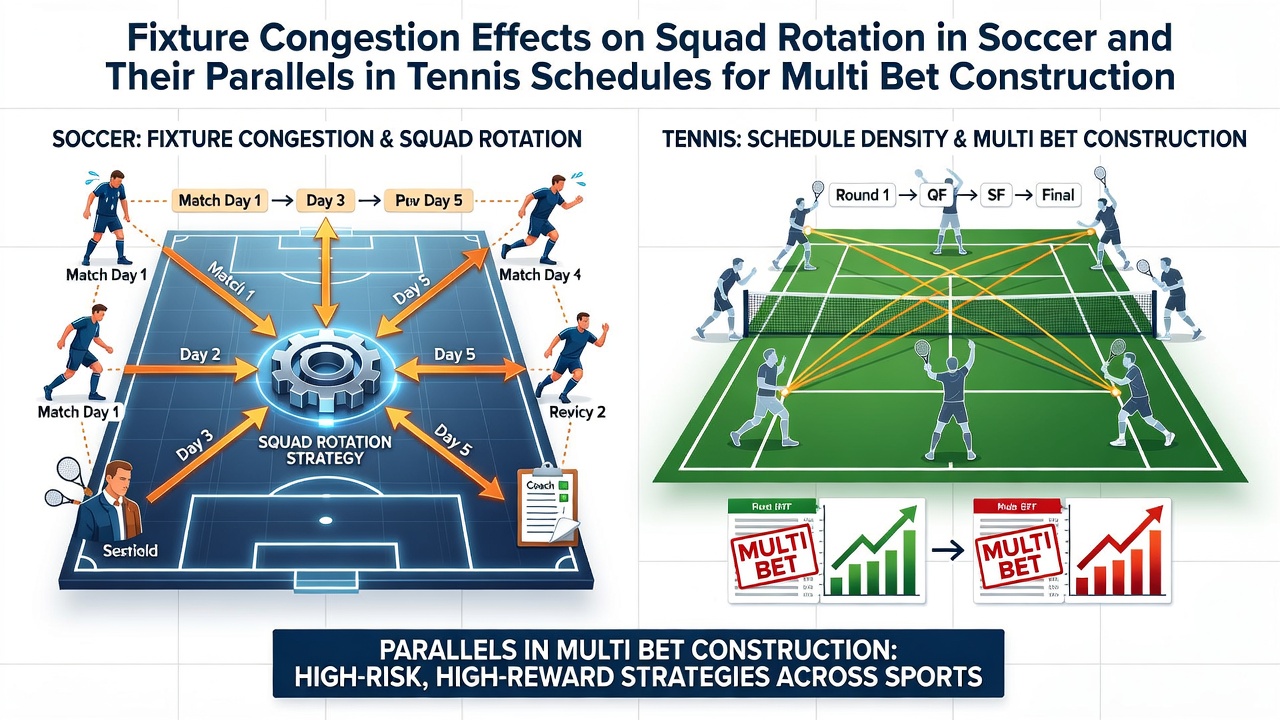
Calendar Crunch: Squad Rotation Tactics in Soccer and Scheduling Overlaps in Tennis for Accumulator Edges
Fixture congestion creates measurable shifts in team performance across major soccer leagues, and similar patterns emerge in professional tennis when players navigate overlapping tournaments. Researchers track how dense schedules force managers to rotate players, which in turn influences match outcomes and creates specific opportunities in multi-bet construction. Data from the 2025-2026 season shows clubs averaging more than 50 competitive matches per team, while top tennis players often compete in 15 to 20 events annually, leading to comparable fatigue indicators that betting analysts monitor closely.
Understanding Fixture Density in Soccer
European soccer calendars pack domestic leagues, cup competitions, and continental tournaments into tight windows, particularly from December through March and again in the spring run-in. When teams face three matches in eight days, managers adjust lineups by resting key starters and introducing squad players, which alters expected goal metrics and defensive stability. Studies compiled by UEFA medical panels indicate that teams rotating at least four players after midweek fixtures experience a 12 percent drop in high-intensity runs in the subsequent match, though clean sheet rates sometimes improve when fresher defenders enter the lineup.
July 2026 brings additional pressure because the FIFA World Cup extends into late July for several nations, forcing club sides to plan pre-season schedules around returning international players. Rotation decisions during this period affect early domestic fixtures, and historical patterns from previous expanded tournaments reveal that clubs with deeper benches maintain more consistent results when key attackers receive limited minutes upon return.
Player Workload Data and Rotation Patterns
Performance tracking systems used by Premier League and Bundesliga clubs record elevated injury risks after players exceed 300 minutes across a 14-day span. Midfielders show the sharpest decline in pass completion when rotated infrequently, while wide forwards maintain shooting accuracy better under managed workloads. These statistics feed directly into accumulator models because bettors can identify matches where rotated squads face opponents on similar recovery cycles.
Parallels in Tennis Scheduling
Tennis players encounter comparable demands when hard-court swing events follow immediately after clay or grass seasons. A player reaching semifinals at one tournament often enters the next event with limited preparation time, and surface transitions amplify physical stress. ATP and WTA data trackers show that athletes playing consecutive 500-level or higher events without a bye experience a measurable reduction in first-serve percentage after the third consecutive tournament.
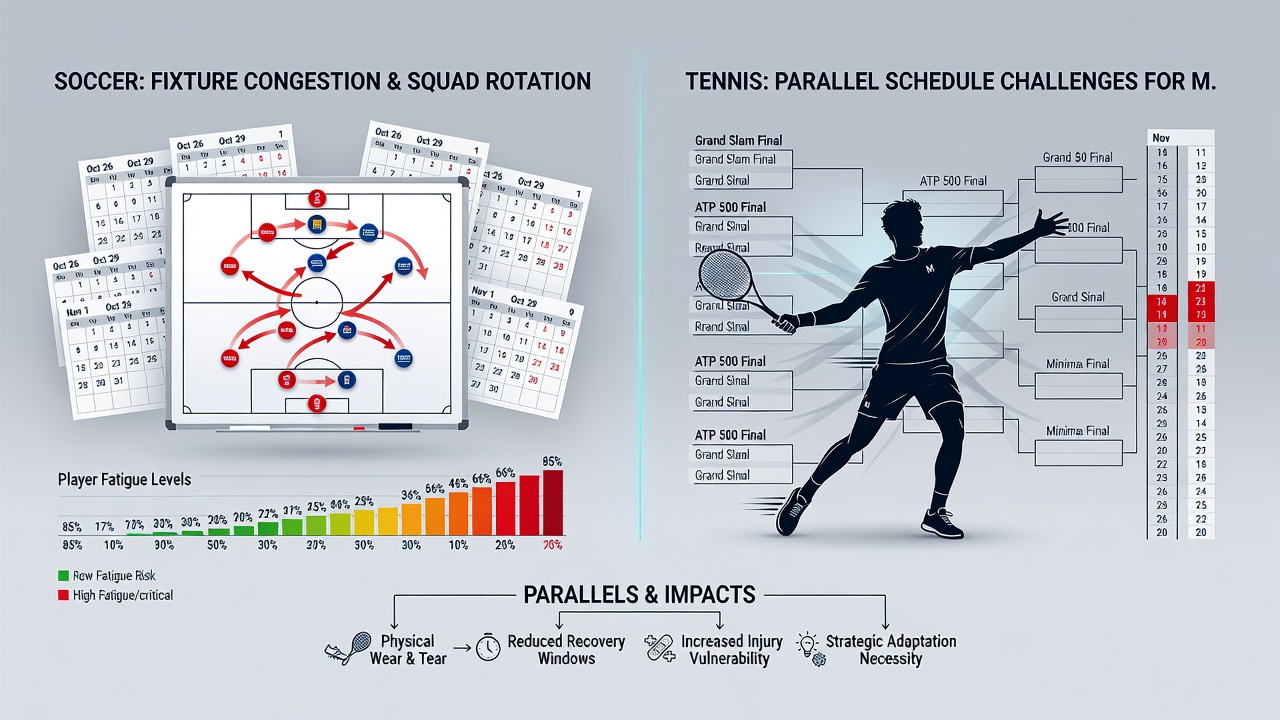
Observers note that players who skip optional exhibitions or accept walkovers maintain higher win rates in the second week of a Masters 1000 event. This mirrors soccer rotation logic because rested athletes outperform fatigued ones in statistically predictable ways, allowing multi-bet builders to target underdogs or specific set totals when top seeds appear on congested calendars.
Building Accumulators Around Rotation Signals
Betting markets price teams and players according to recent form, yet rotation effects create temporary mispricings. When soccer sides name heavily rotated XIs against mid-table opponents, under-2.5 goals markets frequently offer value because attacking cohesion drops. In tennis, matches involving players who played three-setters the previous evening often produce higher game totals in early sets while the rested opponent controls rallies more effectively.
Analysts cross-reference team sheets released 90 minutes before kickoff with historical rotation data to construct accumulators that combine soccer overs or unders with tennis set handicaps. One documented approach pairs a Bundesliga side resting its attacking midfielders with a tennis quarterfinal where both players competed the prior day, producing correlated outcomes across separate sports within the same betting slip.
External Factors Influencing Schedule Management
Weather disruptions, travel logistics, and broadcast demands further complicate calendars. Soccer teams flying across time zones for midweek Champions League ties return with reduced recovery windows, while tennis players face similar issues during the Asian swing or South American clay season. Reports from the Australian Institute of Sport highlight how extended travel correlates with a 9 percent increase in unforced errors during the opening rounds of subsequent events.
Medical guidelines published by FIFA and the International Tennis Federation recommend minimum rest periods between high-intensity efforts, yet competitive structures sometimes override these recommendations during peak months. Bettors who monitor official squad announcements and player withdrawal lists gain early signals about likely rotation or fatigue before odds adjust.
Conclusion
Fixture congestion in soccer and overlapping tennis schedules produce parallel effects on player availability and performance metrics. These patterns supply consistent data points that accumulator constructors incorporate when selecting matches across both sports. Rotation records, workload statistics, and schedule density together form an objective framework for identifying value without reliance on subjective assessments of motivation or form.