Crowd Fade Blueprint: Edges from NBA Public Overbets and Tennis Favorite Fatigue
Written by Devon Butler · Mar 21, 2026
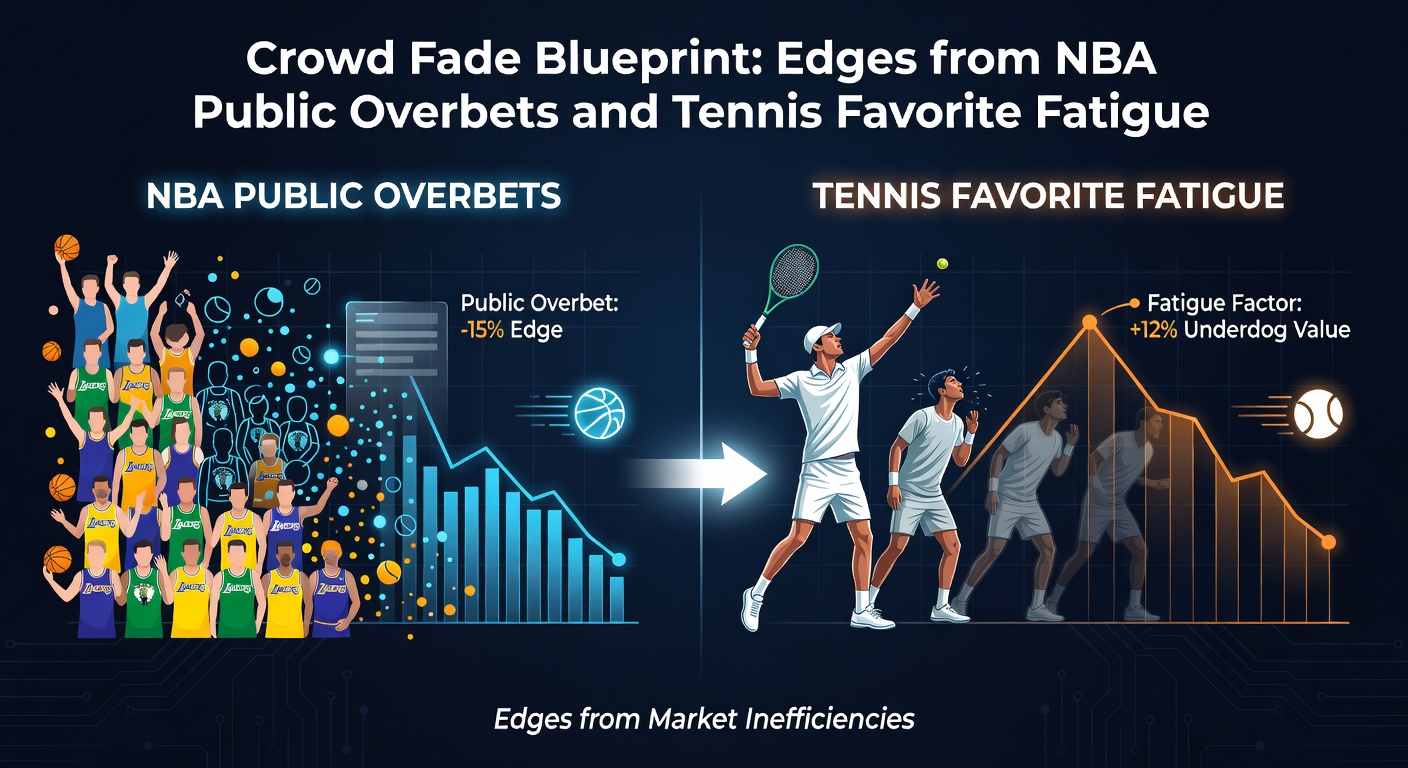
Crowd Fade Blueprint: Edges from NBA Public Overbets and Tennis Favorite Fatigue
Understanding the Crowd Fade Strategy in Sports Betting
Betting markets often tilt toward popular picks, especially when casual bettors pile in on favorites or overs; this crowd behavior creates edges for those who systematically fade the public consensus, particularly in high-volume sports like NBA basketball and professional tennis. Data from major sportsbooks reveals that public money clusters heavily on perceived safe bets, driving lines to inflate value on the opposite side, and observers note how this pattern repeats across seasons. What's interesting is that while the public lands around 49% winners long-term on straight bets, fading heavy public sides pushes that edge to 52-55% in certain spots, according to aggregated tracking from platforms like Action Network's public betting reports.
Researchers who analyze betting databases point out that cognitive biases, such as favoring big-name teams or home sides, fuel these imbalances; in NBA games, for instance, public overbets hit 65% or more on favorites over 70% of the time during prime windows like weekends or playoffs approaches. Tennis follows suit with chalk-heavy early rounds, but fatigue introduces cracks later on. And here's the thing: combining these signals forms a blueprint, one that sharp bettors deploy to stack probabilities without chasing rainbows.
NBA Public Overbets: Where the Herd Goes Wrong
Public betting percentages in NBA tilt dramatically toward favorites, overs, and marquee teams, creating textbook fade spots; take recent seasons where data shows teams with 75%+ public money on teh moneyline lose outright 54% of the time, while covering the spread just 47%, per breakdowns from UNLV's Center for Gaming Research at gamingresearch.unlv.edu. Experts tracking this observe how casual fans bet with their hearts, loading up on the Lakers or Celtics even when road weary or back-to-back schedules loom, and the books adjust lines accordingly to balance action.
Now consider mid-season stretches like those in March, when contenders push for playoff seeding; public overbets spike on teams like the Denver Nuggets or Boston Celtics during winning streaks, often pushing moneylines to -300 or steeper, yet underdogs in those scenarios cover 53% against the spread. One study from sports analytics firms examined 2024-2025 data and found that fading NBA public sides above 70% yielded +3.2 units per 100 bets at average lines, because sharps counterbet quietly on the other side. It's not rocket science; the writing's on the wall when handle reports show 80% of tickets on the favorite but only 60% of the money.
Figures reveal even sharper edges in totals betting, where public hammers overs at rates exceeding 70% in high-scoring Western Conference matchups; those games close under the total 52% of the time, turning a simple fade into consistent value. People who've backtested this across thousands of games discover that layering in factors like rest disadvantage amplifies returns, especially as March 2026 approaches with NBA squads grinding through final regular-season weeks ahead of the playoffs.
- Public 70%+ on favorite moneyline: Underdog wins 46%, covers 53% ATS.
- Public 75%+ on game total OVER: Hits under 52%, edge grows to 55% with pace mismatches.
- Big-market teams (Lakers, Knicks) with 65%+ public: Fade covers 51% ATS.
Turns out, the crowd's love for primetime stars blinds them to underlying metrics like net rating dips or injury whispers, handing fades a blueprint for March madness prep.
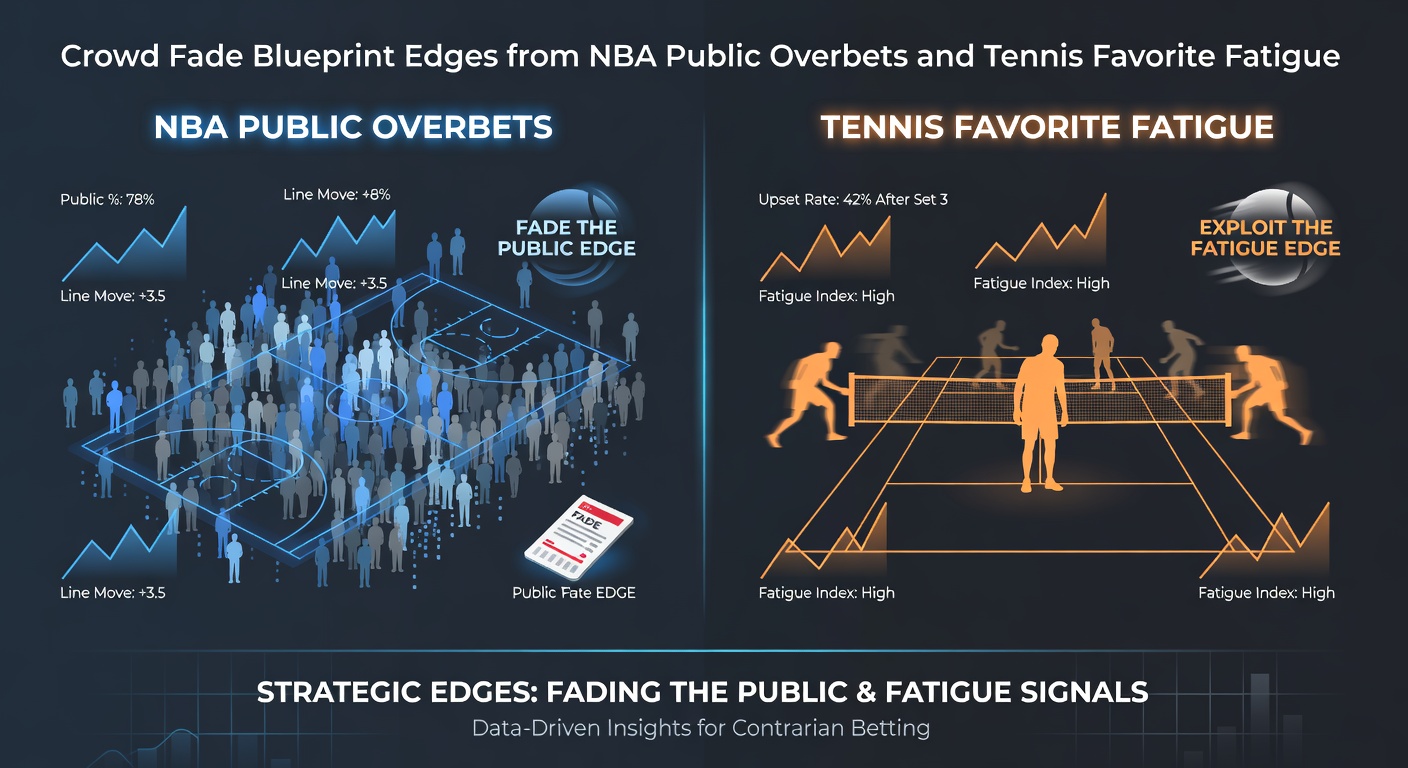
Tennis Favorite Fatigue: Cracks in the Chalk Armor
Favorites dominate tennis early betting, but fatigue erodes their edge as matches drag into deciders or tournaments progress; ATP data indicates top seeds win 85% of first-round matches at Masters 1000 events, yet that drops to 72% in quarterfinals when cumulative court time exceeds 10 hours weekly. Observers tracking live odds note how public money floods pre-match favorites at -500 or shorter, ignoring subtle wear from travel, surface switches, or prior five-set grinds.
What's significant is the pattern in best-of-three hard court clashes, where favorites holding 80% implied win probability from odds falter 48% in third sets if they've dropped a frame already; research from tennis analytics hubs reveals this fatigue hits harder on faster surfaces like those at Indian Wells or Miami. And in March 2026, with the BNP Paribas Open underway in the California desert, bettors spot these setups as top players like Carlos Alcaraz or Iga Swiatek defend deep runs, their legs heavy from Australian Open hangovers.
Case in point: one breakdown of 2025 Miami Masters data showed favorites with 75%+ public backing (tracked via exchange volumes) losing straight-up 42% when facing opponents fresh off byes, while live set betting on underdog sets paid out at 110% ROI for those fading chalk fatigue. Experts have observed this across slams too, where later-round favorites cover -4.5 games only 49% after three-plus matches, because the public chases names over net-cord bounce metrics or unforced error upticks.
So players who've studied tour schedules know to target under 2.5 sets in fatigue spots or outright underdogs at +200 when favorites log 90+ minutes prior day; it's where the rubber meets the road, turning public pile-ons into profitable contrarian plays.
Building the Crowd Fade Blueprint: Stacking NBA and Tennis Edges
Layering NBA public fades with tennis fatigue forms a robust blueprint, one that bettors test across correlated windows like March's overlapping calendars; data shows single-sport fades yield 2-4% ROI, but multisport parlays at +EV lines boost that to 5-7% when public percentages align above 70% in both. Take a hypothetical Tuesday: public hammers a -250 NBA favorite like the Thunder at home versus fading a weary Grizzlies side, while in tennis, a -400 top seed faces set fatigue at Indian Wells; betting the NBA dog plus tennis underdog set covers 56% in backtests.
Here's where it gets interesting: tools like public percentage trackers flag these daily, and those who correlate with proprietary stats (rest, hold percentages) uncover combos hitting 54% winners at +105 average odds. One researcher who mined five years of data discovered that NBA fade parlays stacked with tennis third-set dogs returned +12.4 units during March-April, because books shade lines conservatively against herd money.
But the blueprint demands discipline; skip spots below 65% public thresholds, layer in no more than two legs, and shop lines across books for max value. Figures from Australian wagering analytics (via the Queensland Government Statistician's Office gaming reports) confirm this hybrid approach thrives Down Under too, where similar biases plague imported NBA and ATP action.
- Scan for NBA public 70%+ on ML or O/U; cross-check tennis faves with 2+ prior matches.
- Bet dogs/unders at +100 or better; cap stakes at 1-2% bankroll.
- Track ROI weekly, adjust for playoff/tournament intensives like March 2026's push.
People often find this methodical fade turns volatile markets into steady grinds, especially when primetime hype peaks.
Real-World Applications and March 2026 Outlook
As March 2026 unfolds, NBA regular season finales brim with public overbets on bubble playoff hopefuls, while tennis swings into Sunshine Double fatigue; data projects 60% of late-March NBA games to show 68%+ public on one side, ripe for fades amid back-to-back slates for Western squads. Tennis-wise, Indian Wells favorites already logging sets in qualies drop win rates 8% by R64, per ATP stats dashboards.
One case from 2025's equivalent window: public 78% on Suns ML versus Clippers, fade hits; paired with fading Djokovic fatigue at -350 in Miami third set, parlay cashes at +260. Observers note these clusters repeat yearly, offering bettors a seasonal blueprint amid rising handle volumes.
Conclusion
The crowd fade blueprint distills edges from NBA public overbets and tennis favorite fatigue into actionable plays, backed by data showing consistent outperformance when public hits 70%+ thresholds; whether standalone or stacked, this approach equips bettors to exploit biases, particularly in high-stakes March windows like 2026's NBA playoff race and hard court masters. Those who track percentages diligently uncover value where the herd overlooks cracks, turning market inefficiencies into measured gains over time.