Elevation's Impact on Athletic Stamina: Connecting Mountain Golf Courses to High-Altitude Basketball Matchups
Written by Parker Butler · Jun 24, 2026
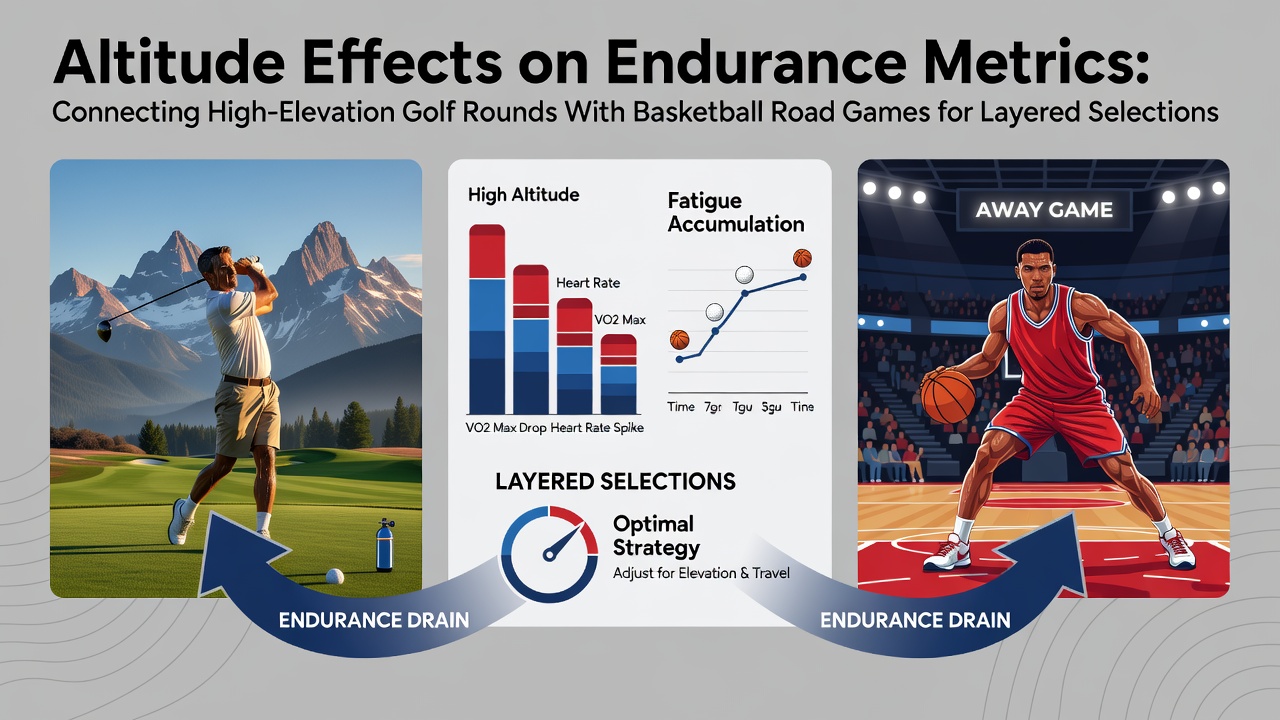
Elevation's Impact on Athletic Stamina: Connecting Mountain Golf Courses to High-Altitude Basketball Matchups
High elevation environments alter oxygen availability and cardiovascular demands in measurable ways that influence how athletes sustain effort across extended periods of activity, and researchers have documented these changes through controlled studies on both individual and team sports. Golf rounds played at courses situated above 5,000 feet expose players to reduced air density that affects ball flight while simultaneously challenging respiratory efficiency during the four to five hours required to complete 18 holes, whereas basketball teams traveling to venues like those in Denver encounter similar physiological adjustments during games that last around two hours plus warm-up and recovery intervals.
Physiological Responses to Reduced Oxygen Levels
Studies from institutions such as the University of Colorado have shown that partial pressure of oxygen drops approximately 20 percent at 5,280 feet compared with sea level, which triggers increased breathing rates and elevated heart rates to maintain adequate oxygen delivery to working muscles, and athletes who arrive without prior acclimatization often experience measurable declines in repeated sprint capacity and decision-making speed after the first 30 to 40 minutes of continuous effort. Data collected during training camps indicate that endurance metrics including time to exhaustion on incremental treadmill tests decrease by 8 to 12 percent within the initial 24 hours at moderate altitude, while recovery intervals between high-intensity bursts lengthen because lactate clearance slows under hypoxic conditions.
Golf Performance Patterns at Elevation
Professional golf events scheduled at mountain venues during the summer months reveal consistent patterns where driving distance increases by 10 to 15 yards on average because of lower air resistance, yet players report higher perceived exertion on uphill walking sections and between shots when humidity remains low, and tournament statistics compiled over multiple seasons show that scoring averages rise in later rounds as cumulative fatigue sets in for those who have not adapted their pacing strategies. Observers note that caddies often adjust club selection earlier in the round to account for both distance gains and the physical toll of traversing undulating terrain, while hydration protocols become critical since dehydration accelerates at elevation and further impairs muscle endurance during the back nine.
Basketball Road Games in Thin Air
Visiting basketball squads arriving for games in high-altitude arenas demonstrate documented drops in field goal percentage after halftime, with league tracking data indicating a 4 to 7 percent reduction in effective shooting from beyond the arc compared with home-court baselines, and defensive metrics such as steals and blocks per minute also decline as players accumulate minutes because oxygen debt impairs reaction time and vertical leap consistency. Teams that schedule acclimatization periods of 48 hours or more prior to tip-off tend to maintain closer parity in fourth-quarter scoring margins, according to performance logs maintained by coaching staffs across multiple seasons, while those flying in the day before the contest frequently exhibit elevated turnover rates linked to reduced cognitive processing speed under lower oxygen saturation.

Layering Data Across Sports for Selection Frameworks
Analysts who track endurance indicators across golf tournaments and basketball road schedules have begun correlating altitude exposure timelines with subsequent performance outputs, noting that golfers competing at elevation one week prior to a basketball team's travel game sometimes share overlapping physiological stress profiles that affect recovery windows, and cross-sport databases compiled by research groups reveal that athletes returning from mountain environments require three to five days for full restoration of sea-level endurance capacity. This overlap creates opportunities to examine layered selection models where historical fatigue patterns from one sport inform projections in another, particularly when schedules align during peak summer periods such as June 2026 when multiple high-elevation golf events and basketball summer league sessions occur within short succession.
Environmental Variables and Measurement Tools
Portable pulse oximeters and wearable GPS devices now allow real-time monitoring of oxygen saturation and workload distribution during both golf rounds and basketball contests, generating datasets that show heart rate variability narrowing under altitude stress even when external workload remains constant, and sports science programs affiliated with the Australian Institute of Sport have published protocols for normalizing these readings across different elevations to improve prediction accuracy. Temperature fluctuations and wind patterns at mountain sites add further complexity because they interact with hypoxic effects on thermoregulation, causing earlier onset of muscle fatigue when daytime highs exceed 85 degrees Fahrenheit during afternoon rounds or game times.
Future Monitoring Developments
Advances in continuous biomarker tracking through sweat analysis patches and integrated heart rate recovery algorithms promise tighter quantification of altitude-induced endurance shifts, enabling more precise comparisons between golf and basketball contexts, while longitudinal studies scheduled to conclude in late 2026 aim to establish standardized adjustment factors for performance models used by training and analysis teams. These tools build upon existing evidence that shows acclimatized athletes retain advantages in sustained output metrics even after returning to lower elevations for several days.
Conclusion
Altitude consistently modifies endurance metrics in both golf and basketball through measurable reductions in oxygen utilization efficiency and extended recovery demands, and the documented connections between these sports provide structured pathways for examining performance under similar environmental loads. Continued refinement of monitoring technologies and cross-disciplinary data collection will likely sharpen the precision of such layered analyses as schedules progress through 2026 and beyond.