Schedule Congestion Effects on Squad Depth Utilization Across Football and Basketball Markets
Written by Parker Vogel · Jul 17, 2026
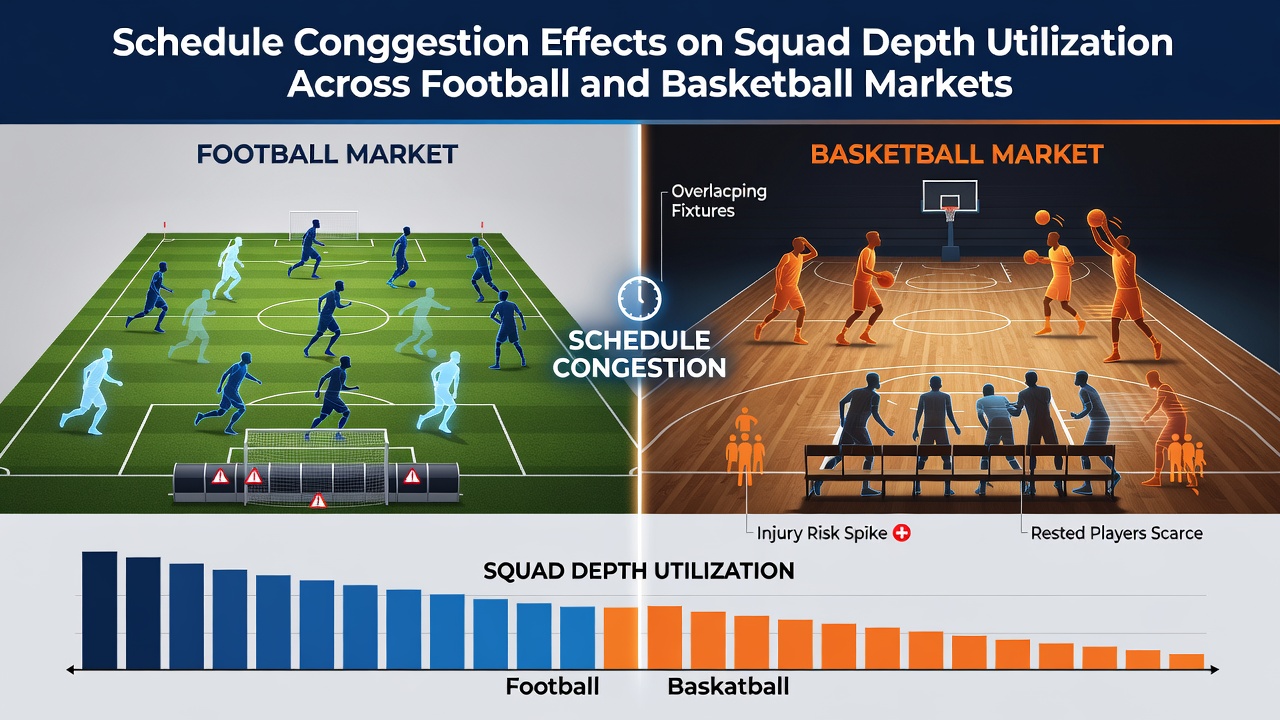
Packed fixture lists force clubs across soccer and basketball to manage limited rosters with precision, and data from multiple seasons shows clear patterns in how depth gets deployed. Leagues in Europe and North America run overlapping domestic cups, continental competitions, and international windows that compress recovery time, leading teams to rotate players more aggressively when congestion peaks.Football Fixture Patterns and Rotation Trends
European soccer calendars stretch from August through May with added midweek ties in the Champions League and Europa League, while domestic cups create further clusters. Researchers tracking the English Premier League found that teams facing three matches in eight days increased bench minutes by an average of 22 percent compared to standard weeks, according to figures compiled by the UEFA Technical Study Group. Squad depth utilization rises because starters accumulate fatigue faster under such loads, and coaches respond by introducing substitutes earlier in games.
July 2026 stands out because the expanded FIFA World Cup overlaps with pre-season preparations for several domestic leagues, and clubs must balance recovery for returning internationals against early domestic fixtures. Those who studied this know that rotation becomes essential when players return from the tournament with limited training time before competitive action resumes.
Basketball Schedule Density and Player Minutes
NBA and EuroLeague schedules pack 82-game regular seasons plus playoffs into roughly seven months, and back-to-back sets occur frequently. Statistics from the 2024-2025 campaign indicated that teams on three-games-in-four-nights stretches rested starters 18 percent more often than during lighter periods, with data drawn from official league tracking systems. Depth players receive elevated roles because coaches monitor load management metrics to reduce injury risk during these stretches.
Cross-Sport Comparisons
Football and basketball share similar dynamics when congestion intensifies, yet differences emerge in how depth gets activated. Soccer rotations often involve tactical substitutions at half-time or the 60-minute mark to preserve freshness, whereas basketball sees staggered minutes distributed across entire lineups to maintain defensive intensity. Studies from the Australian Institute of Sport highlight that both sports record higher utilization rates for reserve players when recovery windows shrink below 48 hours between contests.
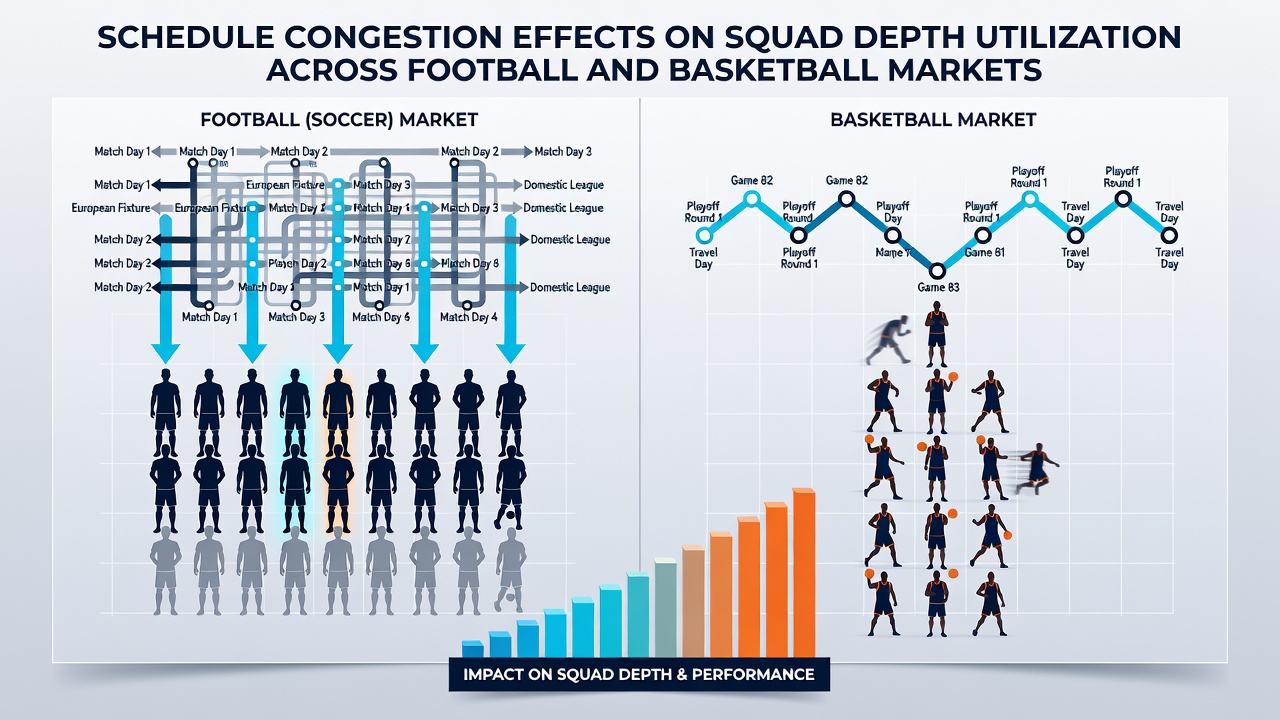
Market Implications for Squad Planning
Transfer markets react to these patterns as clubs seek versatile squad members capable of handling increased minutes. Data from the 2025 summer window showed elevated spending on multi-positional players in both soccer and basketball, with clubs citing fixture congestion as a primary driver. Observers note that teams with deeper benches maintain steadier performance across congested periods, while shallower squads experience sharper drops in output during repeated high-intensity fixtures.
International calendars add another layer because national team windows interrupt club schedules and create additional recovery demands upon return. Those who've examined multi-year trends see consistent spikes in squad rotation immediately following international breaks when domestic leagues resume with compressed timelines.
Strategic Adjustments Across Leagues
Coaches in both sports implement structured rotation plans that factor in travel distances and opponent strength, and evidence from league databases confirms that planned rest periods correlate with sustained win rates during dense schedule blocks. Squad depth utilization therefore functions as a measurable response to external calendar pressures rather than an optional tactic.
Conclusion
Schedule congestion directly influences how football and basketball teams allocate playing time, with rotation patterns adjusting to fixture density across seasons. Data continues to track these effects through 2026 and beyond as calendars evolve, and organizations monitor squad management practices to maintain competitive balance.