Schedule Strain and Output Shifts in Premier League Matches Plus ATP Events
Written by Devon Butler · Aug 26, 2026

Schedule Strain and Output Shifts in Premier League Matches Plus ATP Events
Fixture density creates measurable changes in player metrics across the Premier League calendar and ATP tour events, with data tracking distance covered, sprint frequency, and error rates revealing consistent patterns when teams or individuals face repeated high-intensity contests without adequate recovery windows. August 2026 marks the start of another demanding domestic season in England while ATP players navigate hard-court swings in North America that often overlap with lingering effects from European clay and grass campaigns earlier in the summer.
Premier League Patterns Under Repeated Matches
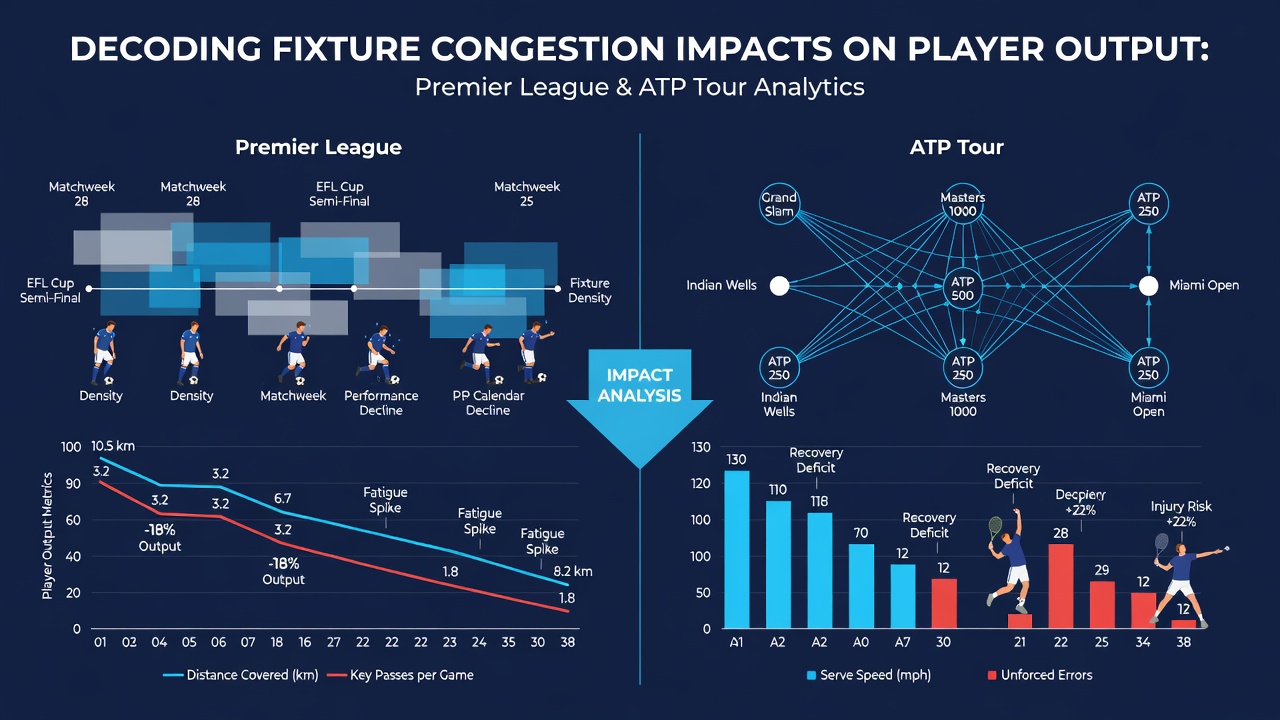
Clubs in the top flight regularly encounter periods of three matches inside eight days during winter months and occasional August clusters when European commitments begin early, and tracking data from Opta and similar providers shows average high-speed running drops by roughly 8 to 12 percent in the third game of such sequences. Midfielders and full-backs register the largest reductions because their positional demands require sustained coverage of the pitch, whereas central defenders sometimes maintain similar totals through more static positioning. Injury incidence rises during these blocks according to figures compiled by the Premier League's own medical reporting system, with muscle strains accounting for the majority of added absences compared to standard single-match weeks.
ATP Tour Scheduling and Recovery Metrics
ATP events pack multiple best-of-three or best-of-five sets into consecutive days during Masters 1000 weeks and the two-week Grand Slams, and serve-speed averages plus unforced-error counts shift noticeably after the second or third consecutive match on limited rest. Data released by the ATP Tour's performance analytics unit indicates that players contesting five matches in six days post a 15 percent increase in double-fault rates during deciding sets compared with their opening-round baselines. Surface transitions compound these effects, especially when athletes move from clay-court events in late spring directly into North American hard-court tournaments without extended adaptation periods.
Comparative Output Indicators Across Both Sports
Researchers at the University of Queensland's sports science department published a 2024 analysis comparing team-sport and individual-sport fatigue markers, finding that football players exhibit slower post-match heart-rate recovery when fixtures arrive every three days while tennis competitors show elevated creatine kinase levels after multi-day tournament stretches. Both datasets point to reduced decision-making accuracy under fatigue, visible in pass-completion percentages falling below seasonal averages in the Premier League and in break-point conversion rates declining during later rounds of ATP events. External load monitoring through GPS and accelerometer units now forms part of standard preparation protocols at many Premier League clubs and ATP training centers, allowing staff to adjust training volume when cumulative data crosses predetermined thresholds.
Recovery Windows and Performance Stabilization
Periods of four or more rest days between Premier League fixtures correlate with restored high-intensity output, according to longitudinal studies covering multiple seasons, while ATP players who receive at least 48 hours between matches maintain closer to baseline serve percentages. International breaks in football provide one natural reset point each autumn and spring, yet the addition of expanded club competitions since 2021 has reduced the frequency of such pauses for elite squads. In tennis the calendar includes mandatory off-weeks for top-ranked players, but many lower-ranked athletes accept extra events to accumulate ranking points, leading to extended stretches of consecutive tournaments that researchers link to higher withdrawal rates in the final quarter of the season.
Monitoring Tools and League Responses
Both the Premier League and ATP Tour have introduced or expanded player-welfare measures in recent cycles, including limits on squad registration sizes for European fixtures and mandatory rest protocols during certain tournament weeks. Wearable technology supplies continuous feedback on sleep duration and readiness scores, and teams integrate these readings into selection decisions when congestion peaks. Studies from the Australian Institute of Sport have contributed comparative models showing that proactive load management reduces soft-tissue injury incidence across both football and tennis cohorts, although implementation varies by club resources and individual player contracts.
Conclusion
Available performance datasets illustrate clear associations between fixture density and declines in specific output measures for Premier League squads and ATP competitors alike, with recovery time emerging as the primary moderating factor across reviewed studies and official league reports. Continued refinement of monitoring systems and scheduling adjustments will shape how these impacts evolve in seasons ahead.