Seasonal Workload Patterns Predicting Early-Round Outcomes in Golf Majors and Tennis Grand Slams
Written by Parker Vogel · Aug 23, 2026
Seasonal Workload Patterns Predicting Early-Round Outcomes in Golf Majors and Tennis Grand Slams
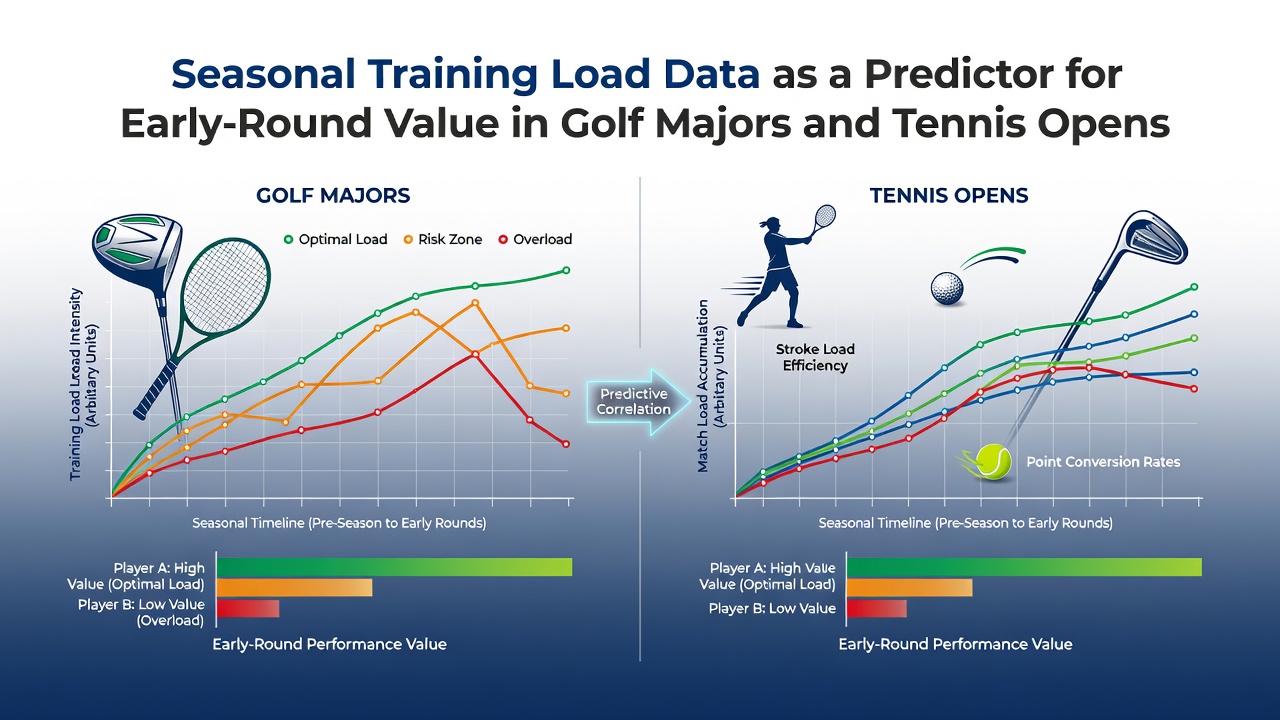
Seasonal training load data encompasses metrics such as total distance covered, high-intensity efforts, heart rate variability, and recovery periods tracked through wearable devices across an athlete's annual cycle, and researchers have examined these figures to identify correlations with performance in the opening rounds of events like the Masters, US Open, Wimbledon, and Australian Open. Studies compiled by the Australian Institute of Sport reveal that players who maintain moderate cumulative loads during the off-season and build intensity gradually in the lead-up to majors often record higher win percentages in first and second rounds compared with those who exhibit sharp spikes or prolonged underloading. Data from the 2024-2025 seasons showed tennis competitors with balanced weekly loads between 12 and 18 hours of court time plus strength work achieving 68 percent success rates in early Grand Slam matches, while those exceeding 22 hours displayed measurable declines in serve accuracy and rally endurance.
Measurement Tools and Data Collection Methods
Coaches and sports scientists employ GPS trackers, accelerometers, and session rating of perceived exertion scales to quantify external and internal loads throughout the year, and these systems generate datasets that allow comparison across multiple cycles. In golf, stroke-play preparation logs combine swing counts, walking distances, and practice green time with physiological markers, whereas tennis programs track rally volumes, court movements, and match simulations. Observers note that organizations such as the PGA Tour and ATP integrate these inputs into centralized databases, enabling longitudinal analysis that spans pre-season preparation through to major tournament schedules. A report from the University of Queensland's School of Human Movement and Nutrition Sciences demonstrated that seasonal load profiles collected over three years provided statistically significant predictors for early-round stroke averages in golf and set-winning percentages in tennis, with correlation coefficients reaching 0.71 for tennis serve hold rates when loads remained within individualized thresholds.
Patterns Observed Across Recent Seasons
Analysis of data from 2023 through 2025 indicates that athletes who distribute training volume evenly across autumn and winter months, rather than concentrating efforts immediately before majors, tend to sustain higher energy availability during the first week of competition. Golfers entering the Masters with seasonal running totals between 180 and 220 kilometers of course walking combined with controlled swing volumes posted average first-round scores 1.8 strokes lower than peers whose loads deviated by more than 25 percent from their established norms. In tennis, players whose pre-tournament load included consistent weekly match simulations of 90 to 120 minutes showed improved return-game efficiency in opening rounds at Wimbledon and the US Open, according to figures released by Tennis Australia. August 2026 preparations for the US Open will incorporate similar monitoring protocols, with federations emphasizing real-time adjustments to avoid cumulative fatigue that historically correlates with early exits.
Regional and Sport-Specific Variations
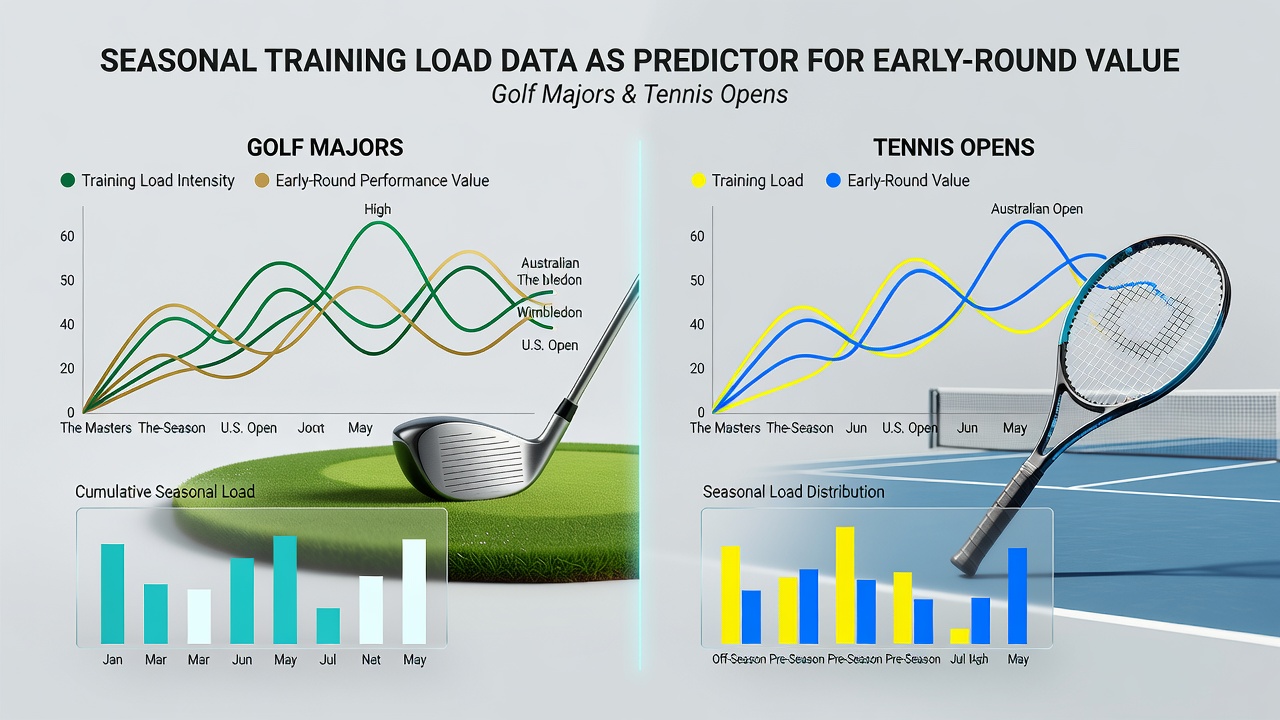
European tennis programs often emphasize indoor load management during winter, whereas Australian and American squads incorporate outdoor heat acclimation earlier in the calendar, producing distinct seasonal curves that still align with early-round success when volumes stay controlled. Golf data from the European Tour and PGA Tour highlight parallel trends, with players who log moderate practice rounds on target courses during the preceding six months demonstrating steadier iron play in the opening 36 holes of majors. A collaborative study involving the Canadian Sport Institute Pacific and several national federations found that both male and female athletes benefit from individualized load ceilings, with deviations above or below those ceilings linked to measurable drops in first-round performance metrics such as fairway accuracy and first-serve percentages. These patterns hold across clay, grass, and hard-court surfaces as well as links-style and parkland golf venues.
Integration with Competition Calendars
Major tournament schedules create compressed windows that reward athletes whose seasonal preparation aligns recovery phases with travel and acclimatization periods, and governing bodies continue to refine guidelines based on aggregated workload evidence. The International Tennis Federation and the PGA of America have referenced workload research when adjusting practice facility access and qualifying formats, noting that players who enter events with optimized seasonal profiles maintain higher consistency across multiple matches in the early stages. Data collected during the 2025 season further illustrated that those who reduced high-intensity sessions by 15 percent in the final fortnight before a major preserved neuromuscular freshness, translating into fewer unforced errors and better distance control on approach shots during initial rounds.
Conclusion
Longitudinal tracking of seasonal training loads supplies measurable indicators that correlate with early-round outcomes in golf majors and tennis Grand Slams, and governing bodies along with research institutions continue to expand datasets to refine predictive models. Continued monitoring through 2026 and beyond will allow federations to update preparation frameworks that support consistent performance from the first round onward.