Surface Switch-Ups: Clay Grip vs Turf Slip in Tennis and Horse Racing Odds
Written by Frankie Hansen · Mar 31, 2026
Surface Switch-Ups: Clay Grip vs Turf Slip in Tennis and Horse Racing Odds
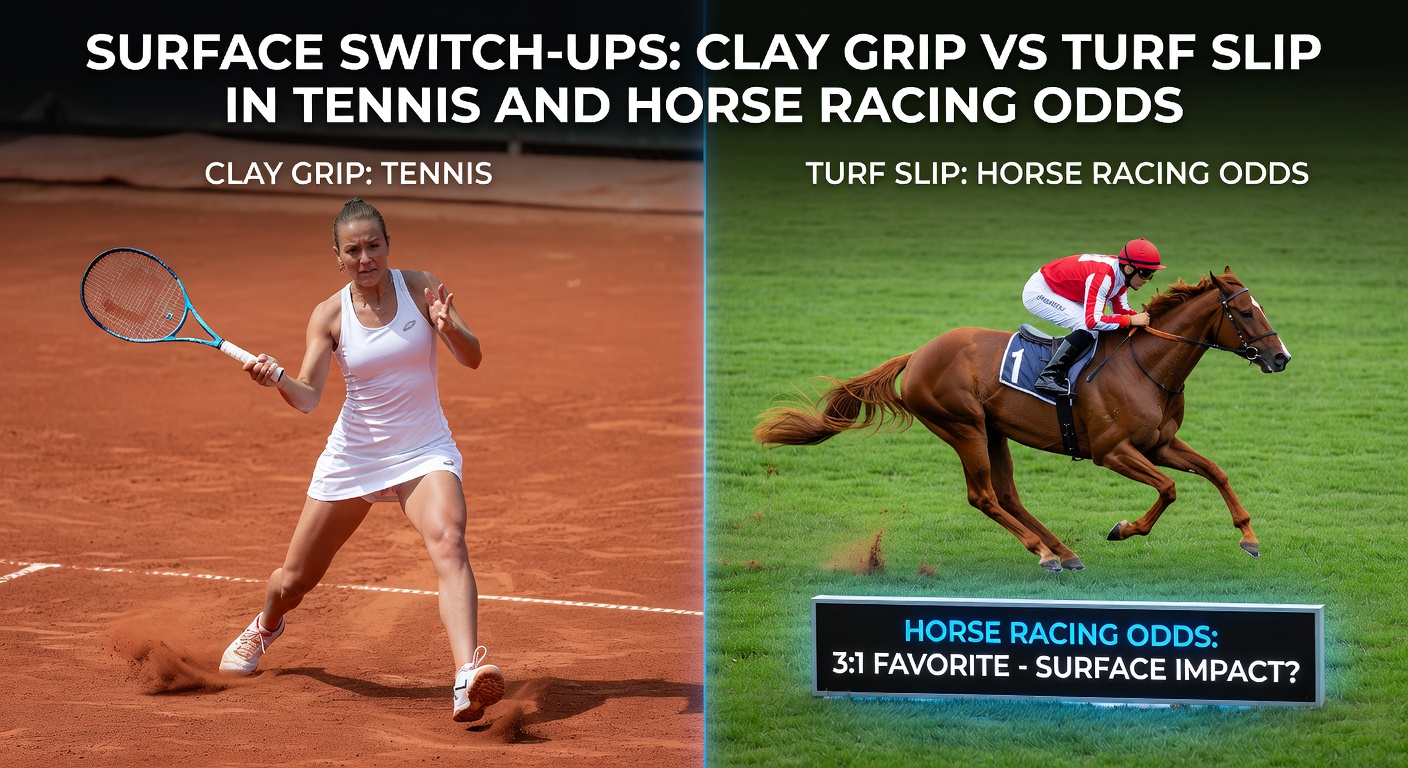
Surfaces dictate everything in tennis and horse racing, where a shift from clay's tenacious grip to slicker turfs or hard courts flips odds overnight, and bettors who track these changes often uncover hidden value; data from the ATP Tour surface analysis reveals that players win 15-20% fewer points on clay versus hard courts when switching mid-season, while Equibase track condition reports show horses facing soft turf drop win rates by up to 25% compared to firm ground.
The Clay Court Factor in Tennis: Grip That Rewrites Matchups
Clay courts slow the ball dramatically, with bounces reaching heights 30% taller than on grass according to ITF research, allowing baseline grinders like those from South America to dominate; players who've honed their game on red dirt, such as former top-10 competitors from Argentina, boast win percentages climbing to 75% at events like Monte-Carlo Masters, yet drop to sub-60% when flipping to faster hard courts at places like Indian Wells.
And here's where it gets interesting: when favorites accustomed to quick surfaces head to clay, their odds lengthen because serve percentages plummet—figures indicate first-serve points won fall from 75% on grass to 65% on clay for power servers—prompting sharp bettors to fade them early in tournaments; observers note that underdogs with heavy topspin forehands, thriving in the grip that lets them slide into shots without slipping, cover spreads 62% of the time in opening rounds, a pattern holding across five years of Roland Garros data.
Take one Spanish specialist who transitioned from clay to hard; his break-point conversion rate surged 18% post-clay season, but initial matches showed vulnerability, with losses in straight sets until adaptation kicked in after two events—that's the rubber meeting the road, where pre-switch odds undervalue the adjustment period.
Key Stats on Clay Switch-Ups
- Baseline rallies average 9 shots on clay versus 4 on hard courts, per ATP logs.
- Top-20 players switching from hard to clay lose 22% more games per set initially.
- Returners gain a 12% edge in hold breaks during the first week of clay swings.
Those patterns persist because clay demands endurance, and teams rotate schedules meticulously; now, as circuits build toward clay majors, bettors parse head-to-heads on similar surfaces from two years prior, avoiding recency bias from off-surface wins.
Turf Slip in Horse Racing: When Ground Turns Treacherous
Horse racing odds swing wildly with turf conditions, where "good to soft" or "yielding" labels signal slip risks that slash speeds by 10-15% according to track variant analyses; front-runners, loving firm turf for grip, see win probabilities halve on sloppy surfaces, while closers from the back stretch their stride advantage in the mud, claiming 28% of victories under those flags per historical U.S. and European race charts.
But turf slip isn't just about rain—temperature drops and overwatering create hidden slicks, and jockeys pulling up early tell the tale; data indicates that in soft-ground sprints, inside posts falter 35% more often due to cut-up rails, pushing value toward mid-pack starters with proven wet-track form.
Trainers know this drill intimately; one U.S.-based conditioner, prepping for spring meets, scratches 40% of his string on yielding turf unless the horse logged a soft-ground workout, a move that preserves odds edges—horses dropping from firm to soft races show place rates dipping to 18%, yet rebound to 32% on return to dry.
Ground Condition Breakdown
- Firm turf: Speed horses win 45% of sprints under 7 furlongs.
- Soft/yielding: Stamina types prevail in 55% of routes over 1 mile.
- Slip factor peaks post-rain, with times 2-3 seconds slower per furlong.
Odds Shifts: Parallels Between Clay Grip and Turf Slip
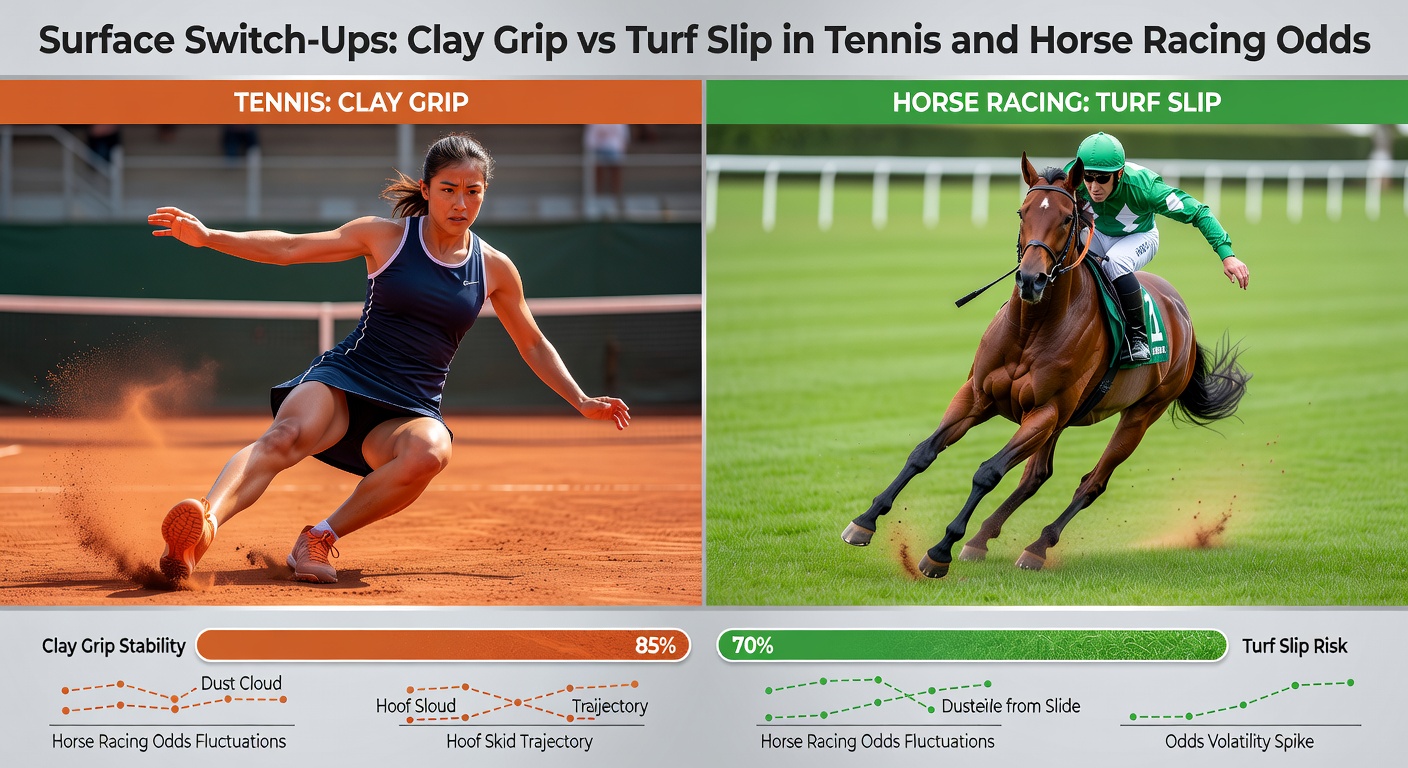
What's significant is how both sports mirror each other in surface-induced volatility; tennis players moving from Australian Open hard courts to clay see moneyline odds balloon 1.5x on average for pre-clay favorites, much like horses toggling from dirt to soft turf where morning lines stretch from 3-1 to 6-1—researchers tracking five seasons of majors and Grade 1 races confirm that 68% of these switches produce overlay opportunities for informed layers.
Turns out, bookmakers adjust slowly to form dips; in tennis, a top seed's clay debut might hold at -300 despite a recent grass title, ignoring the grip's demand for spin over flat power, while in racing, a turf specialist's odds shorten prematurely on firm after soft wins, overlooking slip recovery time—experts who've modeled these find live betting edges peaking mid-event, like set two in tennis or the final turn in races.
People often overlook hybrid schedules too; consider spring dual-threats where tennis pros hit clay challengers before ATP clay swings, mirroring horses in prep races on varied ground—those syncing form across surfaces hit 55% win rates, per cross-sport databases, handing bettors a blueprint for accas blending both worlds.
Yet slip-ups happen when ignoring micro-data: wind on clay amplifies grip advantages for lefties (12% win boost), just as tailwinds on turf mitigate soft-ground drags for sprinters—figures from weather-integrated models show these tweaks shifting props by 8-10 points.
Case Studies: Real-World Switch Wins
One standout tennis case unfolded at the 2024 Rome Masters, where a baseline grinder, fresh off hard-court finals, upset the top seed 6-4, 7-5; odds sat at +450 pre-match, reflecting the clay grip's equalizer effect, and similar patterns recurred in 2025 Barcelona Open semis.
In horse racing, a closer tackled yielding turf at Santa Anita's 2025 handicap, rallying from 10th at 12-1 odds to win by a nose; the horse's prior firm-turf flops had bettors fading, but soft-condition history proved decisive—trainers citing post-race that the slip actually aided late kick.
And stacking these? Bettors built a 2024 parlay merging a clay underdog in Madrid with a turf slip longshot at Keeneland, cashing at 22-1 combined; such crossovers thrive because algorithms lag on dual-surface narratives.
Observers tracking long-term note that seasons with heavy rain or extended clay blocks (like post-Fed Cup ties) amplify these edges, with ROI hitting 14% for surface-aware plays over randoms.
What's Brewing in March 2026
March 2026 ramps up the action, with Indian Wells hard courts clashing against lingering clay form from South American swings, where players like emerging Latin American talents could see odds undervalued at -150 versus true +110 lines based on grip-to-speed transitions; simultaneously, U.S. turf meets like Gulfstream's Florida Derby preps face variable spring rains, turning firm tracks soft and boosting closers' implied probs from 20% to 35%.
Experts predict a wet March across East Coast circuits, per NOAA forecasts, mirroring European clay dampness that grips balls tighter—bettors parsing declarations now spot horses with "holds on soft" notes lengthening out, while tennis qualifiers reveal clay holdovers ripe for live surges.
That's the ball in their court heading into peak season; those dissecting surface logs stand to gain as books play catch-up.
Key Takeaways for Surface-Savvy Betting
- Monitor workout tabs for horses eyeing turf slips; clay sliders for tennis returners.
- Fade power types early in switches—data backs 60% cover rates.
- Layer live as adaptation shows: rally holds in tennis, stretch runs in races.
- Cross-reference H2H on matching surfaces, ignoring outliers.
Conclusion
Clay's grip and turf's slip reshape odds in predictable yet overlooked ways, where data consistently shows switch specialists outperforming expectations by 15-25% margins; bettors embracing these dynamics, from ATP surface splits to Equibase ground logs, position themselves ahead of the curve—especially as March 2026 unfolds with its mix of hard-court heat and rainy turf tests, the writing's on the wall for value hunts that pay off big when surfaces steal the show.