When the Ground Changes the Game: Venue Influences on Projections for Racket Sports, Club Activities, and Track Events
Written by Devon Butler · May 31, 2026
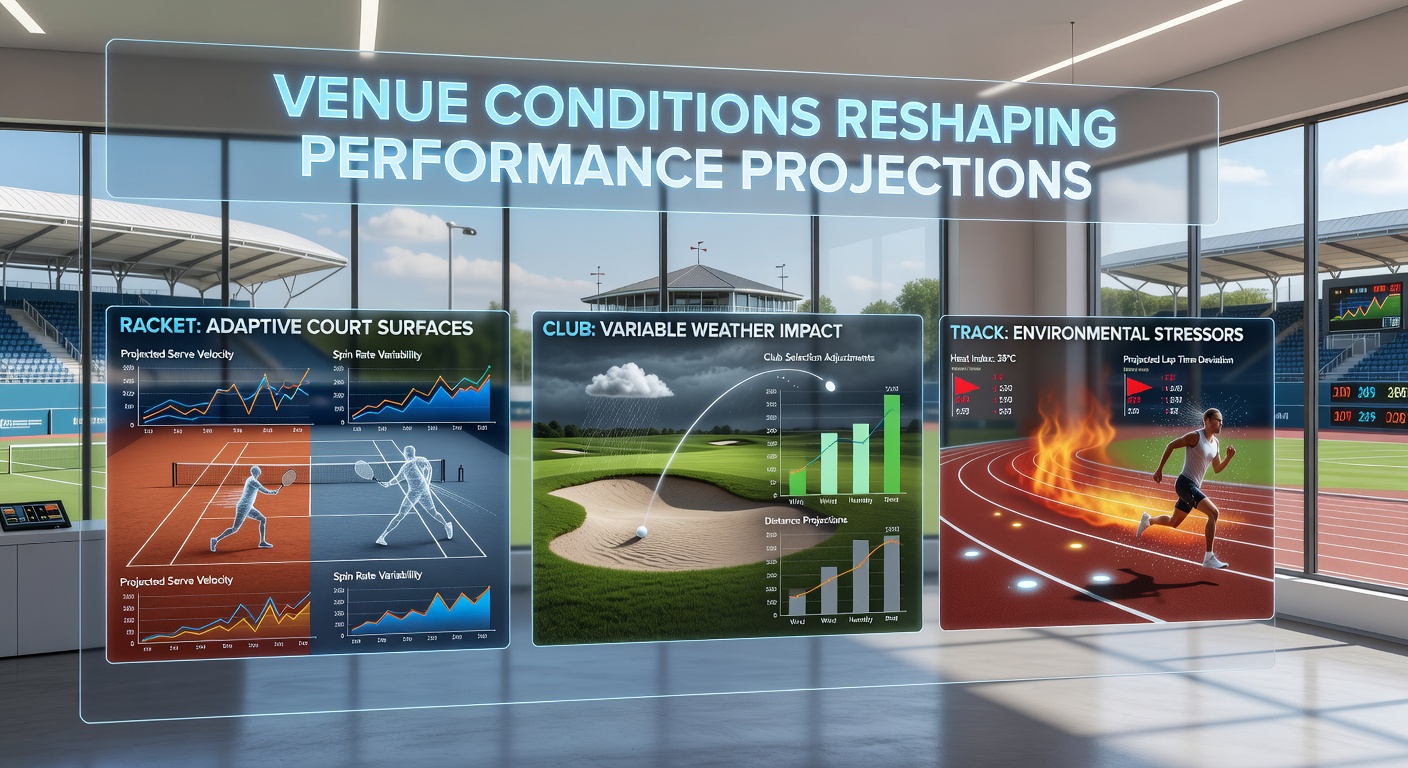
When the Ground Changes the Game: Venue Influences on Projections for Racket Sports, Club Activities, and Track Events
Venue conditions play a measurable role in reshaping performance projections across racket sports, club-based disciplines like golf, and track events in athletics and racing circuits, with surfaces, elevation, lighting, and weather patterns creating distinct variables that data analysts track throughout competition calendars. In May 2026 the French Open will highlight clay court dynamics once again as players adjust movement patterns and rally lengths compared to hard or grass venues, while concurrent golf majors and European track meets demonstrate parallel shifts in club selection and stride efficiency under similar environmental pressures.
Racket Sports and Surface Specific Adaptations
Tennis and similar racket events show clear statistical differences tied to court composition, with clay slowing ball speeds and increasing rally durations while grass accelerates serves and favors shorter points according to performance databases maintained by the International Tennis Federation. Hard courts fall in between these extremes yet still introduce variables like temperature-driven bounce consistency that researchers from the University of Florida have quantified in multiple studies linking surface temperature readings to error rates during extended matches. Indoor venues further alter projections by removing wind and humidity factors, allowing athletes to maintain higher serve percentages across sets as documented in event reports from the ATP Tour.
Players who compete across multiple surfaces within short timeframes often exhibit measurable drops in first-serve accuracy during transitions, while those who specialize on one surface maintain steadier output; analysts compile these patterns to refine pre-tournament expectations rather than relying on generic rankings alone.
Club Disciplines and Course Variables
Golf provides another clear case where venue conditions reshape scoring projections, as course length, rough height, green speed, and prevailing winds combine to change club selection and shot strategies from round to round. Data collected by the PGA Tour shows average driving distances decreasing by several yards on courses set up with firmer fairways and tighter landing areas, while softer conditions after rainfall allow longer carries yet increase the likelihood of plugged lies in bunkers. Elevation changes at venues like those in the Rockies add further complexity because thinner air reduces drag on the ball and extends distances beyond what players experience at sea level.
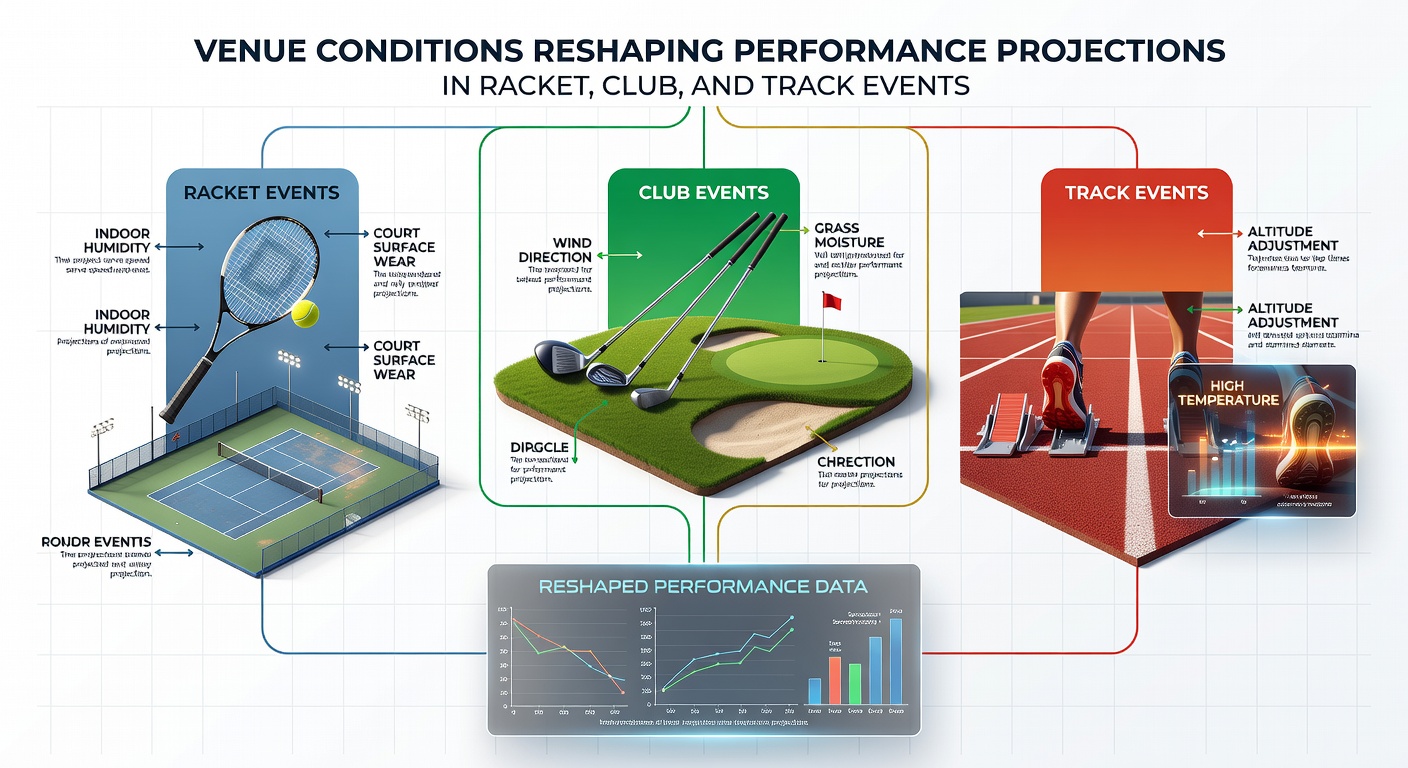
Event organizers adjust pin placements and tee boxes daily to manage scoring averages, creating a moving target for projection models that incorporate real-time weather feeds from national meteorological services. Those who monitor these adjustments alongside historical scoring data at specific courses gain a more precise view of expected totals than models that treat all venues as equivalent.
Track Events and Environmental Adjustments
Track and field competitions along with harness and thoroughbred racing circuits reveal similar venue-driven effects, where surface composition, banking angles, and altitude influence split times and overall race projections. Synthetic tracks installed at many European venues maintain more consistent footing across temperature ranges than traditional dirt or turf, reducing the variance in finishing times that wet weather introduces at older facilities. Altitude at high-elevation meets such as those in Colorado or parts of South Africa measurably boosts performances in explosive events while challenging endurance disciplines, a pattern confirmed in physiological research published through the Journal of Applied Physiology.
Racing surfaces likewise affect pace projections because firmer ground encourages front-running styles whereas softer conditions favor closers who conserve energy early. Handicappers and performance analysts incorporate soil moisture readings and wind data published by regional racing authorities to refine their assessments before each meeting rather than applying uniform speed figures across all locations.
Integrated Data Approaches Across Disciplines
Cross-sport analyses have grown more common as organizations collect granular venue data that feeds into unified projection systems. Academic teams at institutions such as the Australian Institute of Sport have examined how humidity and temperature interact with different surfaces to alter muscle fatigue rates, findings that apply across tennis matches, golf rounds, and track sessions held on the same day in shared climates. These studies emphasize active monitoring of conditions rather than static assumptions, allowing projections to update as weather or surface maintenance changes unfold during events.
Regulatory bodies in multiple regions, including the European Sports Commission and Canadian Centre for Ethics in Sport, publish guidelines on venue standardization that further inform how analysts weight environmental factors when building comparative models. The result is a more layered approach where historical venue-specific records combine with live inputs to produce refined expectations for individual and team outputs.
Conclusion
Venue conditions continue to supply measurable inputs that reshape performance projections in racket, club, and track events through documented effects on movement, equipment interaction, and physiological responses. Organizations and researchers maintain expanding datasets that capture these variables at both elite and developmental levels, supporting more accurate forecasting as competitions unfold across the 2026 calendar and beyond.